



What is KYC in Banking? Full Form, Process & Status Explained

Naina Rajgopalan
Published on:
Last Updated:

What is KYC in Banking? Full Form, Process & Status Explained
Naina Rajgopalan
Published on:
Last Updated:
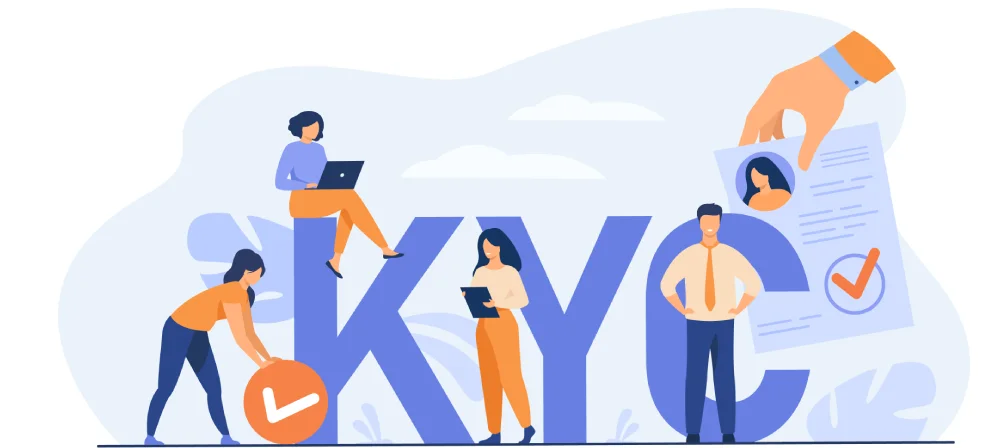
Every bank account, loan, and investment in India starts with one step: KYC. The KYC full form is Know Your Customer, and it's the process banks and financial institutions use to verify your identity and address before letting you access their services. It's mandated by the Reserve Bank of India (RBI) under its Master Direction on KYC, and it exists to keep the banking system secure, prevent fraud, and stop money laundering before it starts.
This guide covers the full form and meaning of KYC, how it works at your bank, the documents you'll need, how to check your KYC status, and the online and offline steps to get it done.
KYC Full Form And Meaning
KYC stands for Know Your Customer. In simple terms, the meaning of KYC is the process by which a bank or financial institution confirms that you are who you say you are, and that you live where you say you live, before doing business with you.
Every bank, NBFC, and digital lender in India runs this check because it's a legal requirement under RBI's KYC Master Direction, not an optional formality. Whether you're opening a savings account, taking a loan, or investing in mutual funds, you'll be asked to complete KYC at some point.
What Is KYC In Banking?
In banking, KYC is the process of verifying a customer's identity and address before they can open an account, take a loan, or use any financial product.
When you approach any bank for KYC, whether it's a large public sector bank, a private bank, or an NBFC like Freo, the process establishes two things: who you are and where you live, based on the documents you provide.
KYC At Your Bank: How It Works
KYC bank verification typically happens at one of three points:
When you open a new account: Every bank requires KYC before activating a savings account, current account, or fixed deposit.
When you apply for credit: Personal loans, credit cards, and lines of credit all require a fresh or updated KYC check.
Periodic re-KYC: Banks are required by RBI to re-verify customer KYC periodically, more frequently for higher-risk accounts.
Most banks in India now support KYC bank account opening entirely online through eKYC, so you rarely need to visit a branch unless you're an NRI, a minor's guardian, or your bank specifically requires in-person verification for your account type.
What Is OKYC? OKYC Full Form Explained
OKYC stands for Offline KYC. It's a method of verification that uses your Aadhaar details without connecting to the internet during the actual verification step, either through an Aadhaar XML file you download from the UIDAI website, or a QR code generated from your Aadhaar.
Here's how OKYC differs from the online eKYC process:
You generate an Aadhaar XML or QR code from the UIDAI portal using a share code you set yourself.
You submit this file to your bank or financial institution instead of your raw Aadhaar number.
Your actual Aadhaar number stays masked, which gives OKYC a privacy edge over Aadhaar-based eKYC.
The verification is just as fast as eKYC, since the bank reads your details directly from the signed XML or QR file.
OKYC is a good fit if you'd rather not share your full Aadhaar number with every institution you deal with, while still getting a paperless verification.
What Is A KYC Number?
A KYC number is the unique 14-digit identifier issued once your KYC record is registered with CERSAI, the Central KYC Registry. Once you have a KYC number, you can quote it to a new bank, mutual fund house, or NBFC instead of resubmitting your documents from scratch, since your verified details are already on file centrally under CKYC.
You'll usually receive your KYC number by SMS or email a few days after your first eKYC or CKYC registration. If you can't find it, most banks and the CERSAI portal let you retrieve it using your PAN or registered mobile number.
How To Check Your KYC Status
You can check your KYC status in a few different ways, depending on what it's for:
For your bank account: Log in to your bank's mobile app or net banking, or check the KYC section of your account statement. Most banks also let you call customer care or visit a branch to confirm your status.
For mutual fund investments: Check your KYC status on the KRA (KYC Registration Agency) websites such as CVL KRA, CAMS KRA, or NDML, using your PAN.
For your CKYC record: Visit the CERSAI CKYC portal and search using your PAN or KYC number.
On the Freo app: Your KYC status is visible directly under your profile once you've completed the in-app verification, so you can track it without leaving the app.
Your KYC status will typically show as one of: verified/complete, pending, or on-hold (if a document didn't clear verification). If it shows as pending for more than a few days, it's worth reaching out to the institution directly rather than assuming it will resolve on its own.
KYC Update: What Happens If You Don't Update It
KYC isn't a one-time task. Banks are required by RBI to periodically refresh customer KYC, typically every 2 years for high-risk accounts, every 8 years for medium-risk accounts, and every 10 years for low-risk accounts, though your bank may prompt you sooner if your documents are close to expiry or your details have changed.
A KYC update usually just means re-confirming your existing details or submitting a renewed document, like an updated address proof. Most banks now let you do this online through their app or net banking portal, without a branch visit.
If your KYC isn't updated when it's due, your bank account can be frozen or restricted for debit transactions until it's resolved. You'll still be able to receive credits in most cases, but withdrawals, transfers, and new transactions typically get blocked as a compliance safeguard, not a penalty. Completing the update, once submitted and verified, usually restores full access within a few days.
4 Main Ways Banks Perform KYC
Aadhaar-based eKYC: Electronic verification through your Aadhaar card, allowing for a remote and paperless process.
Video KYC: What is video KYC? It's a completely online process where you connect over video with a bank representative or agent, who reviews and verifies your documents in real time.
Digital KYC: Uses live photographs and scans of Officially Valid Documents (OVDs) submitted online, checked against official records with an added layer of geotagged location verification. You can access your KYC status online for future reference.
In-person Verification (IPV): The traditional method, requiring you to visit the bank in person and submit physical KYC documents.
Importance Of KYC: Why Is It Important?
KYC matters to banks and financial institutions because it helps them to:
• Prevent Fraud: KYC verifies customer identities, making it harder for criminals to launder money or commit other financial crimes.
• Improve Security: Strong KYC procedures make banking transactions safer, giving both customers and regulators more confidence.
• Follow Regulations: KYC compliance isn't optional; it's a legal requirement under RBI guidelines that helps banks fight financial crime.
• Build Trust: KYC helps banks and customers trust each other, since customers know their bank is committed to protecting their interests and keeping the financial system secure.
• Increase Accountability: KYC helps ensure people are responsible for their financial activities, encouraging transparency within the banking system.
When Do You Need To Fill Up A KYC Form?
As a customer, you need to complete KYC when you want to:
• Invest in mutual funds
• Open a bank account
• Request financial planning services through a registered board
• Apply for a credit card, personal loan, home loan, or any other kind of loan
• Change signatories, beneficial owners, or other details on your accounts
Documents Needed For KYC In Banking
For Individuals
You'll need one document from each category:
Proof of Identity: Passport, Voter ID, Driver's License, Aadhaar Card, NREGA Card, or any government-issued photo ID. A PAN card linked to your bank account also strengthens your KYC record and is required for most financial transactions above a certain threshold.
Proof of Address: Utility bill (electricity, water, etc.), bank statement, rental agreement, property tax receipt, or any document with your current address issued by a recognised institution.
For Minors
If the minor is under 10 years old, the guardian operating the account submits their own proof of identity and address. Minors who can operate the account independently provide the same documents as regular individuals.
For Non-Resident Indians (NRIs)
NRIs need to submit:
Passport
Residence Visa Copy
These documents must be attested by:
A foreign embassy or consulate
A notary public
An Indian embassy or consulate
An authorised official from a correspondent bank whose signature your bank can verify
Please note: This list can vary by bank. It's always best to check your specific institution's requirements beforehand.
Why You Need KYC To Take A Loan
KYC isn't only for opening a savings account. Any time you borrow money, whether it's a personal loan, a credit line, or a purchase on EMI, the lender is legally required to verify who you are before disbursing funds. This applies to banks and to NBFCs and digital lenders like Freo in exactly the same way, since RBI's KYC Master Direction covers all regulated lending entities, not just traditional banks.
For a loan specifically, KYC does three things:
Confirms your identity and address against your Aadhaar, PAN, or other OVDs, so the lender knows they're disbursing to the right person.
Feeds into your eligibility and risk assessment, alongside your income details and credit history, before a loan amount is approved.
Protects you from someone else fraudulently taking a loan in your name.
The KYC documents for a personal loan are largely the same as for opening a bank account: one proof of identity (Aadhaar, PAN, passport, or voter ID) and one proof of address, plus a live selfie for digital lenders that use facial verification. Some lenders may also ask for your PAN specifically, since it's tied to your credit history.
On Freo, this entire step happens inside the app: a selfie-based liveness check plus Aadhaar or PAN verification, done in minutes rather than the days it used to take at a branch. Once your KYC is verified, it typically doesn't need to be repeated for your next loan with the same lender, unless your details have changed or a periodic re-KYC is due. If you're weighing your options, our guide on how to take a loan from a bank walks through where KYC fits into the wider approval process.
KYC Verification Process
KYC verification is a mandatory process of identifying and verifying a customer's identity when opening a bank account or availing any financial service.
Step-by-Step Process For KYC Online Verification
Select Your Desired Product: Choose from opening a new savings account, applying for a credit card, or getting a personal loan, then proceed with your application.
Fill Out Your Information: Provide your name, address, date of birth, contact information, and occupation in the online application form.
Upload Your Documents: Upload the required proof of identity and address, following any specific instructions for each document.
Verification Process: The bank verifies your documents through:
Electronic Verification: Checking your details electronically against government databases linked to your Aadhaar or PAN.
Optional Video KYC: Some banks offer video KYC, connecting you virtually with a representative for real-time identity verification.
Liveness Check: A check to confirm you're a real person, often involving instructions like blinking or moving your head.
Notification: The bank confirms your KYC verification is complete, typically within a few business days.
Step-by-Step Process For KYC Offline Verification
Head to the Branch: Locate the nearest branch of the bank or institution that requires your KYC.
Prepare Your Documents: Carry originals and clear photocopies of all necessary identification documents.
Complete the KYC Form: Fill out the provided form with accurate, up-to-date information.
Submit for Verification: Hand over your completed form and document copies to a designated staff member.
Verification Process: Allow the bank time to verify your information against your documents.
Acknowledgement Receipt: You'll receive a receipt once verification is successful.
Confirmation: The bank sends confirmation once your KYC is complete.
Follow-Up (Optional): Follow up if you haven't heard back within a reasonable timeframe.
Record Update: Double-check with the institution that your details are accurately reflected in their system.
The Evolution Of eKYC
Until a few years ago, applying for a loan meant long bank queues, endless paperwork, and weeks or months of waiting for a response. Technology and digitalisation in banking have made the process extremely streamlined through eKYC.
eKYC, or Electronic Know Your Customer, is the process of completing KYC entirely online. The paperless eKYC process has accelerated loan approval and disbursal, cutting a procedure that once took weeks down to a few minutes.
eKYC | OKYC | CKYC |
|---|---|---|
Electronic Know Your Customer | Offline Know Your Customer | Central Know Your Customer |
Verification done electronically and online, usually via Aadhaar-based authentication. | Verification done through offline Aadhaar XML or QR code, without exposing your full Aadhaar number. | Verification done by checking the central KYC database maintained by CERSAI, which stores KYC records across institutions. |
Simple, fast, and fully paperless. | Just as quick as eKYC, with an added layer of privacy. | Lets you skip repeat KYC each time you open an account with a new institution, since your verified record is already on file. |
What are the benefits of eKYC when applying for loans online?
You won't have to submit physical documents for loan approvals.
eKYC speeds up the loan process, ensuring quick disbursal.
Verification that used to take days now takes just a few minutes.
You can link your Aadhaar Card to authenticate your identity through a single ID.
Paperless eKYC has made the personal loan application process simpler and reduced the time taken to sanction a loan to just a couple of days.
Freo is one of the leading online lending platforms in India, built around exactly this shift: KYC, income verification, and loan approval all handled digitally in the app, so you can go from application to disbursal without a single branch visit or physical document.
Complete Your KYC Quickly For Secure And Hassle-Free Banking
KYC verification helps protect your financial activities, prevent fraud, and ensure smooth access to banking, loans, and digital financial services.

Frequently Asked Questions (FAQs)
What information is required for KYC?
To complete KYC, you'll need to provide proof of identity (such as Aadhaar or passport) and proof of address (like a utility bill or government-issued document) to verify your identity.
What is the OKYC full form?
OKYC stands for Offline Know Your Customer. It lets you complete verification using an Aadhaar XML file or QR code generated offline through the UIDAI portal, without sharing your full Aadhaar number with the institution.
How do I check my KYC status?
You can check your KYC status through your bank's app or net banking, on your KRA's website (for mutual funds) using your PAN, or on the CERSAI CKYC portal using your PAN or KYC number.
What is a KYC number?
A KYC number is the unique 14-digit ID issued once your KYC is registered with CERSAI's Central KYC Registry. You can quote it to new institutions instead of resubmitting your documents each time.
What happens if KYC is not updated?
If your KYC update is overdue, your bank account can be restricted for debit transactions like withdrawals and transfers until the update is completed and verified.
Who ensures KYC compliance?
Financial institutions, NBFCs, and other regulated entities are responsible for maintaining KYC compliance under RBI guidelines to uphold service integrity and prevent fraud.
Is KYC mandatory for bank accounts?
Yes, KYC verification is mandatory for opening a bank account or conducting any financial transaction in India.
How does the KYC process work in a bank?
The KYC process at a bank involves collecting and verifying your personal information and documents to confirm your identity, either online through eKYC or in person at a branch.
How can I complete KYC verification?
You can complete KYC online by submitting scanned copies of documents, or offline by visiting a branch and filling out the KYC form.
What documents are required for KYC?
KYC requires proof of identity, proof of address, and a recent photograph.
Can KYC be done online?
Yes, you can complete KYC verification online by uploading scanned copies of the necessary documents.
How can I update my KYC details in the bank?
Visit your bank's nearest branch with the necessary documents and fill out the KYC update form, or check if your bank supports an online KYC update through its app or website.
Is it possible to do KYC from home?
Yes, you can complete KYC verification from home by uploading the required documents on your bank's website or mobile app.
What happens if KYC is not completed for a bank account?
If KYC is not completed, your bank account may be frozen or restricted for further transactions as per RBI's regulatory guidelines.
What are the stages of KYC?
The 5 stages of KYC include Customer Acceptance Policy, Customer Identification Procedures, Monitoring of Transactions, Risk Management, and Review of KYC Policies.
Can KYC be done at any bank?
KYC verification must be completed with the bank where you are opening an account or conducting a financial transaction.
Can KYC be done at any branch of my bank?
Yes, you can complete KYC verification at any branch of the bank where you hold an account.
Naina Rajgopalan
Naina Rajgopalan has a thing for numbers and a deep fascination to learn about all things finance. She's been money-wise from a young age and has always shared her knowledge and tips with those around her. Being a part of the content team at Freo, a neobank that offers flexible and customised financial products, along with benefits such as insurance on balance, safe & secure banking, and so on, Naina stays updated with the latest of what happens in the banking and fintech industries. She has taken upon herself to share her knowledge with readers across all walks of life to help them manage their finances and budgets better, so they can make better decisions while spending, borrowing, investing and saving.
What is KYC in Banking? Full Form, Process & Status Explained
Naina Rajgopalan
Published on:
Last Updated:
Every bank account, loan, and investment in India starts with one step: KYC. The KYC full form is Know Your Customer, and it's the process banks and financial institutions use to verify your identity and address before letting you access their services. It's mandated by the Reserve Bank of India (RBI) under its Master Direction on KYC, and it exists to keep the banking system secure, prevent fraud, and stop money laundering before it starts.
This guide covers the full form and meaning of KYC, how it works at your bank, the documents you'll need, how to check your KYC status, and the online and offline steps to get it done.
KYC Full Form And Meaning
KYC stands for Know Your Customer. In simple terms, the meaning of KYC is the process by which a bank or financial institution confirms that you are who you say you are, and that you live where you say you live, before doing business with you.
Every bank, NBFC, and digital lender in India runs this check because it's a legal requirement under RBI's KYC Master Direction, not an optional formality. Whether you're opening a savings account, taking a loan, or investing in mutual funds, you'll be asked to complete KYC at some point.
What Is KYC In Banking?
In banking, KYC is the process of verifying a customer's identity and address before they can open an account, take a loan, or use any financial product.
When you approach any bank for KYC, whether it's a large public sector bank, a private bank, or an NBFC like Freo, the process establishes two things: who you are and where you live, based on the documents you provide.
KYC At Your Bank: How It Works
KYC bank verification typically happens at one of three points:
When you open a new account: Every bank requires KYC before activating a savings account, current account, or fixed deposit.
When you apply for credit: Personal loans, credit cards, and lines of credit all require a fresh or updated KYC check.
Periodic re-KYC: Banks are required by RBI to re-verify customer KYC periodically, more frequently for higher-risk accounts.
Most banks in India now support KYC bank account opening entirely online through eKYC, so you rarely need to visit a branch unless you're an NRI, a minor's guardian, or your bank specifically requires in-person verification for your account type.
What Is OKYC? OKYC Full Form Explained
OKYC stands for Offline KYC. It's a method of verification that uses your Aadhaar details without connecting to the internet during the actual verification step, either through an Aadhaar XML file you download from the UIDAI website, or a QR code generated from your Aadhaar.
Here's how OKYC differs from the online eKYC process:
You generate an Aadhaar XML or QR code from the UIDAI portal using a share code you set yourself.
You submit this file to your bank or financial institution instead of your raw Aadhaar number.
Your actual Aadhaar number stays masked, which gives OKYC a privacy edge over Aadhaar-based eKYC.
The verification is just as fast as eKYC, since the bank reads your details directly from the signed XML or QR file.
OKYC is a good fit if you'd rather not share your full Aadhaar number with every institution you deal with, while still getting a paperless verification.
What Is A KYC Number?
A KYC number is the unique 14-digit identifier issued once your KYC record is registered with CERSAI, the Central KYC Registry. Once you have a KYC number, you can quote it to a new bank, mutual fund house, or NBFC instead of resubmitting your documents from scratch, since your verified details are already on file centrally under CKYC.
You'll usually receive your KYC number by SMS or email a few days after your first eKYC or CKYC registration. If you can't find it, most banks and the CERSAI portal let you retrieve it using your PAN or registered mobile number.
How To Check Your KYC Status
You can check your KYC status in a few different ways, depending on what it's for:
For your bank account: Log in to your bank's mobile app or net banking, or check the KYC section of your account statement. Most banks also let you call customer care or visit a branch to confirm your status.
For mutual fund investments: Check your KYC status on the KRA (KYC Registration Agency) websites such as CVL KRA, CAMS KRA, or NDML, using your PAN.
For your CKYC record: Visit the CERSAI CKYC portal and search using your PAN or KYC number.
On the Freo app: Your KYC status is visible directly under your profile once you've completed the in-app verification, so you can track it without leaving the app.
Your KYC status will typically show as one of: verified/complete, pending, or on-hold (if a document didn't clear verification). If it shows as pending for more than a few days, it's worth reaching out to the institution directly rather than assuming it will resolve on its own.
KYC Update: What Happens If You Don't Update It
KYC isn't a one-time task. Banks are required by RBI to periodically refresh customer KYC, typically every 2 years for high-risk accounts, every 8 years for medium-risk accounts, and every 10 years for low-risk accounts, though your bank may prompt you sooner if your documents are close to expiry or your details have changed.
A KYC update usually just means re-confirming your existing details or submitting a renewed document, like an updated address proof. Most banks now let you do this online through their app or net banking portal, without a branch visit.
If your KYC isn't updated when it's due, your bank account can be frozen or restricted for debit transactions until it's resolved. You'll still be able to receive credits in most cases, but withdrawals, transfers, and new transactions typically get blocked as a compliance safeguard, not a penalty. Completing the update, once submitted and verified, usually restores full access within a few days.
4 Main Ways Banks Perform KYC
Aadhaar-based eKYC: Electronic verification through your Aadhaar card, allowing for a remote and paperless process.
Video KYC: What is video KYC? It's a completely online process where you connect over video with a bank representative or agent, who reviews and verifies your documents in real time.
Digital KYC: Uses live photographs and scans of Officially Valid Documents (OVDs) submitted online, checked against official records with an added layer of geotagged location verification. You can access your KYC status online for future reference.
In-person Verification (IPV): The traditional method, requiring you to visit the bank in person and submit physical KYC documents.
Importance Of KYC: Why Is It Important?
KYC matters to banks and financial institutions because it helps them to:
• Prevent Fraud: KYC verifies customer identities, making it harder for criminals to launder money or commit other financial crimes.
• Improve Security: Strong KYC procedures make banking transactions safer, giving both customers and regulators more confidence.
• Follow Regulations: KYC compliance isn't optional; it's a legal requirement under RBI guidelines that helps banks fight financial crime.
• Build Trust: KYC helps banks and customers trust each other, since customers know their bank is committed to protecting their interests and keeping the financial system secure.
• Increase Accountability: KYC helps ensure people are responsible for their financial activities, encouraging transparency within the banking system.
When Do You Need To Fill Up A KYC Form?
As a customer, you need to complete KYC when you want to:
• Invest in mutual funds
• Open a bank account
• Request financial planning services through a registered board
• Apply for a credit card, personal loan, home loan, or any other kind of loan
• Change signatories, beneficial owners, or other details on your accounts
Documents Needed For KYC In Banking
For Individuals
You'll need one document from each category:
Proof of Identity: Passport, Voter ID, Driver's License, Aadhaar Card, NREGA Card, or any government-issued photo ID. A PAN card linked to your bank account also strengthens your KYC record and is required for most financial transactions above a certain threshold.
Proof of Address: Utility bill (electricity, water, etc.), bank statement, rental agreement, property tax receipt, or any document with your current address issued by a recognised institution.
For Minors
If the minor is under 10 years old, the guardian operating the account submits their own proof of identity and address. Minors who can operate the account independently provide the same documents as regular individuals.
For Non-Resident Indians (NRIs)
NRIs need to submit:
Passport
Residence Visa Copy
These documents must be attested by:
A foreign embassy or consulate
A notary public
An Indian embassy or consulate
An authorised official from a correspondent bank whose signature your bank can verify
Please note: This list can vary by bank. It's always best to check your specific institution's requirements beforehand.
Why You Need KYC To Take A Loan
KYC isn't only for opening a savings account. Any time you borrow money, whether it's a personal loan, a credit line, or a purchase on EMI, the lender is legally required to verify who you are before disbursing funds. This applies to banks and to NBFCs and digital lenders like Freo in exactly the same way, since RBI's KYC Master Direction covers all regulated lending entities, not just traditional banks.
For a loan specifically, KYC does three things:
Confirms your identity and address against your Aadhaar, PAN, or other OVDs, so the lender knows they're disbursing to the right person.
Feeds into your eligibility and risk assessment, alongside your income details and credit history, before a loan amount is approved.
Protects you from someone else fraudulently taking a loan in your name.
The KYC documents for a personal loan are largely the same as for opening a bank account: one proof of identity (Aadhaar, PAN, passport, or voter ID) and one proof of address, plus a live selfie for digital lenders that use facial verification. Some lenders may also ask for your PAN specifically, since it's tied to your credit history.
On Freo, this entire step happens inside the app: a selfie-based liveness check plus Aadhaar or PAN verification, done in minutes rather than the days it used to take at a branch. Once your KYC is verified, it typically doesn't need to be repeated for your next loan with the same lender, unless your details have changed or a periodic re-KYC is due. If you're weighing your options, our guide on how to take a loan from a bank walks through where KYC fits into the wider approval process.
KYC Verification Process
KYC verification is a mandatory process of identifying and verifying a customer's identity when opening a bank account or availing any financial service.
Step-by-Step Process For KYC Online Verification
Select Your Desired Product: Choose from opening a new savings account, applying for a credit card, or getting a personal loan, then proceed with your application.
Fill Out Your Information: Provide your name, address, date of birth, contact information, and occupation in the online application form.
Upload Your Documents: Upload the required proof of identity and address, following any specific instructions for each document.
Verification Process: The bank verifies your documents through:
Electronic Verification: Checking your details electronically against government databases linked to your Aadhaar or PAN.
Optional Video KYC: Some banks offer video KYC, connecting you virtually with a representative for real-time identity verification.
Liveness Check: A check to confirm you're a real person, often involving instructions like blinking or moving your head.
Notification: The bank confirms your KYC verification is complete, typically within a few business days.
Step-by-Step Process For KYC Offline Verification
Head to the Branch: Locate the nearest branch of the bank or institution that requires your KYC.
Prepare Your Documents: Carry originals and clear photocopies of all necessary identification documents.
Complete the KYC Form: Fill out the provided form with accurate, up-to-date information.
Submit for Verification: Hand over your completed form and document copies to a designated staff member.
Verification Process: Allow the bank time to verify your information against your documents.
Acknowledgement Receipt: You'll receive a receipt once verification is successful.
Confirmation: The bank sends confirmation once your KYC is complete.
Follow-Up (Optional): Follow up if you haven't heard back within a reasonable timeframe.
Record Update: Double-check with the institution that your details are accurately reflected in their system.
The Evolution Of eKYC
Until a few years ago, applying for a loan meant long bank queues, endless paperwork, and weeks or months of waiting for a response. Technology and digitalisation in banking have made the process extremely streamlined through eKYC.
eKYC, or Electronic Know Your Customer, is the process of completing KYC entirely online. The paperless eKYC process has accelerated loan approval and disbursal, cutting a procedure that once took weeks down to a few minutes.
eKYC | OKYC | CKYC |
|---|---|---|
Electronic Know Your Customer | Offline Know Your Customer | Central Know Your Customer |
Verification done electronically and online, usually via Aadhaar-based authentication. | Verification done through offline Aadhaar XML or QR code, without exposing your full Aadhaar number. | Verification done by checking the central KYC database maintained by CERSAI, which stores KYC records across institutions. |
Simple, fast, and fully paperless. | Just as quick as eKYC, with an added layer of privacy. | Lets you skip repeat KYC each time you open an account with a new institution, since your verified record is already on file. |
What are the benefits of eKYC when applying for loans online?
You won't have to submit physical documents for loan approvals.
eKYC speeds up the loan process, ensuring quick disbursal.
Verification that used to take days now takes just a few minutes.
You can link your Aadhaar Card to authenticate your identity through a single ID.
Paperless eKYC has made the personal loan application process simpler and reduced the time taken to sanction a loan to just a couple of days.
Freo is one of the leading online lending platforms in India, built around exactly this shift: KYC, income verification, and loan approval all handled digitally in the app, so you can go from application to disbursal without a single branch visit or physical document.
Complete Your KYC Quickly For Secure And Hassle-Free Banking
KYC verification helps protect your financial activities, prevent fraud, and ensure smooth access to banking, loans, and digital financial services.
Naina Rajgopalan
Naina Rajgopalan has a thing for numbers and a deep fascination to learn about all things finance. She's been money-wise from a young age and has always shared her knowledge and tips with those around her. Being a part of the content team at Freo, a neobank that offers flexible and customised financial products, along with benefits such as insurance on balance, safe & secure banking, and so on, Naina stays updated with the latest of what happens in the banking and fintech industries. She has taken upon herself to share her knowledge with readers across all walks of life to help them manage their finances and budgets better, so they can make better decisions while spending, borrowing, investing and saving.
Know More About Finance

Invest
9 Best Investment Options in India In 2026
Naina Rajgopalan

Invest
Is Fixed Deposit Safe? Benefits, Risks & Safety Explained
Naina Rajgopalan
Table of Contents
Every bank account, loan, and investment in India starts with one step: KYC. The KYC full form is Know Your Customer, and it's the process banks and financial institutions use to verify your identity and address before letting you access their services. It's mandated by the Reserve Bank of India (RBI) under its Master Direction on KYC, and it exists to keep the banking system secure, prevent fraud, and stop money laundering before it starts.
This guide covers the full form and meaning of KYC, how it works at your bank, the documents you'll need, how to check your KYC status, and the online and offline steps to get it done.
KYC Full Form And Meaning
KYC stands for Know Your Customer. In simple terms, the meaning of KYC is the process by which a bank or financial institution confirms that you are who you say you are, and that you live where you say you live, before doing business with you.
Every bank, NBFC, and digital lender in India runs this check because it's a legal requirement under RBI's KYC Master Direction, not an optional formality. Whether you're opening a savings account, taking a loan, or investing in mutual funds, you'll be asked to complete KYC at some point.
What Is KYC In Banking?
In banking, KYC is the process of verifying a customer's identity and address before they can open an account, take a loan, or use any financial product.
When you approach any bank for KYC, whether it's a large public sector bank, a private bank, or an NBFC like Freo, the process establishes two things: who you are and where you live, based on the documents you provide.
KYC At Your Bank: How It Works
KYC bank verification typically happens at one of three points:
When you open a new account: Every bank requires KYC before activating a savings account, current account, or fixed deposit.
When you apply for credit: Personal loans, credit cards, and lines of credit all require a fresh or updated KYC check.
Periodic re-KYC: Banks are required by RBI to re-verify customer KYC periodically, more frequently for higher-risk accounts.
Most banks in India now support KYC bank account opening entirely online through eKYC, so you rarely need to visit a branch unless you're an NRI, a minor's guardian, or your bank specifically requires in-person verification for your account type.
What Is OKYC? OKYC Full Form Explained
OKYC stands for Offline KYC. It's a method of verification that uses your Aadhaar details without connecting to the internet during the actual verification step, either through an Aadhaar XML file you download from the UIDAI website, or a QR code generated from your Aadhaar.
Here's how OKYC differs from the online eKYC process:
You generate an Aadhaar XML or QR code from the UIDAI portal using a share code you set yourself.
You submit this file to your bank or financial institution instead of your raw Aadhaar number.
Your actual Aadhaar number stays masked, which gives OKYC a privacy edge over Aadhaar-based eKYC.
The verification is just as fast as eKYC, since the bank reads your details directly from the signed XML or QR file.
OKYC is a good fit if you'd rather not share your full Aadhaar number with every institution you deal with, while still getting a paperless verification.
What Is A KYC Number?
A KYC number is the unique 14-digit identifier issued once your KYC record is registered with CERSAI, the Central KYC Registry. Once you have a KYC number, you can quote it to a new bank, mutual fund house, or NBFC instead of resubmitting your documents from scratch, since your verified details are already on file centrally under CKYC.
You'll usually receive your KYC number by SMS or email a few days after your first eKYC or CKYC registration. If you can't find it, most banks and the CERSAI portal let you retrieve it using your PAN or registered mobile number.
How To Check Your KYC Status
You can check your KYC status in a few different ways, depending on what it's for:
For your bank account: Log in to your bank's mobile app or net banking, or check the KYC section of your account statement. Most banks also let you call customer care or visit a branch to confirm your status.
For mutual fund investments: Check your KYC status on the KRA (KYC Registration Agency) websites such as CVL KRA, CAMS KRA, or NDML, using your PAN.
For your CKYC record: Visit the CERSAI CKYC portal and search using your PAN or KYC number.
On the Freo app: Your KYC status is visible directly under your profile once you've completed the in-app verification, so you can track it without leaving the app.
Your KYC status will typically show as one of: verified/complete, pending, or on-hold (if a document didn't clear verification). If it shows as pending for more than a few days, it's worth reaching out to the institution directly rather than assuming it will resolve on its own.
KYC Update: What Happens If You Don't Update It
KYC isn't a one-time task. Banks are required by RBI to periodically refresh customer KYC, typically every 2 years for high-risk accounts, every 8 years for medium-risk accounts, and every 10 years for low-risk accounts, though your bank may prompt you sooner if your documents are close to expiry or your details have changed.
A KYC update usually just means re-confirming your existing details or submitting a renewed document, like an updated address proof. Most banks now let you do this online through their app or net banking portal, without a branch visit.
If your KYC isn't updated when it's due, your bank account can be frozen or restricted for debit transactions until it's resolved. You'll still be able to receive credits in most cases, but withdrawals, transfers, and new transactions typically get blocked as a compliance safeguard, not a penalty. Completing the update, once submitted and verified, usually restores full access within a few days.
4 Main Ways Banks Perform KYC
Aadhaar-based eKYC: Electronic verification through your Aadhaar card, allowing for a remote and paperless process.
Video KYC: What is video KYC? It's a completely online process where you connect over video with a bank representative or agent, who reviews and verifies your documents in real time.
Digital KYC: Uses live photographs and scans of Officially Valid Documents (OVDs) submitted online, checked against official records with an added layer of geotagged location verification. You can access your KYC status online for future reference.
In-person Verification (IPV): The traditional method, requiring you to visit the bank in person and submit physical KYC documents.
Importance Of KYC: Why Is It Important?
KYC matters to banks and financial institutions because it helps them to:
• Prevent Fraud: KYC verifies customer identities, making it harder for criminals to launder money or commit other financial crimes.
• Improve Security: Strong KYC procedures make banking transactions safer, giving both customers and regulators more confidence.
• Follow Regulations: KYC compliance isn't optional; it's a legal requirement under RBI guidelines that helps banks fight financial crime.
• Build Trust: KYC helps banks and customers trust each other, since customers know their bank is committed to protecting their interests and keeping the financial system secure.
• Increase Accountability: KYC helps ensure people are responsible for their financial activities, encouraging transparency within the banking system.
When Do You Need To Fill Up A KYC Form?
As a customer, you need to complete KYC when you want to:
• Invest in mutual funds
• Open a bank account
• Request financial planning services through a registered board
• Apply for a credit card, personal loan, home loan, or any other kind of loan
• Change signatories, beneficial owners, or other details on your accounts
Documents Needed For KYC In Banking
For Individuals
You'll need one document from each category:
Proof of Identity: Passport, Voter ID, Driver's License, Aadhaar Card, NREGA Card, or any government-issued photo ID. A PAN card linked to your bank account also strengthens your KYC record and is required for most financial transactions above a certain threshold.
Proof of Address: Utility bill (electricity, water, etc.), bank statement, rental agreement, property tax receipt, or any document with your current address issued by a recognised institution.
For Minors
If the minor is under 10 years old, the guardian operating the account submits their own proof of identity and address. Minors who can operate the account independently provide the same documents as regular individuals.
For Non-Resident Indians (NRIs)
NRIs need to submit:
Passport
Residence Visa Copy
These documents must be attested by:
A foreign embassy or consulate
A notary public
An Indian embassy or consulate
An authorised official from a correspondent bank whose signature your bank can verify
Please note: This list can vary by bank. It's always best to check your specific institution's requirements beforehand.
Why You Need KYC To Take A Loan
KYC isn't only for opening a savings account. Any time you borrow money, whether it's a personal loan, a credit line, or a purchase on EMI, the lender is legally required to verify who you are before disbursing funds. This applies to banks and to NBFCs and digital lenders like Freo in exactly the same way, since RBI's KYC Master Direction covers all regulated lending entities, not just traditional banks.
For a loan specifically, KYC does three things:
Confirms your identity and address against your Aadhaar, PAN, or other OVDs, so the lender knows they're disbursing to the right person.
Feeds into your eligibility and risk assessment, alongside your income details and credit history, before a loan amount is approved.
Protects you from someone else fraudulently taking a loan in your name.
The KYC documents for a personal loan are largely the same as for opening a bank account: one proof of identity (Aadhaar, PAN, passport, or voter ID) and one proof of address, plus a live selfie for digital lenders that use facial verification. Some lenders may also ask for your PAN specifically, since it's tied to your credit history.
On Freo, this entire step happens inside the app: a selfie-based liveness check plus Aadhaar or PAN verification, done in minutes rather than the days it used to take at a branch. Once your KYC is verified, it typically doesn't need to be repeated for your next loan with the same lender, unless your details have changed or a periodic re-KYC is due. If you're weighing your options, our guide on how to take a loan from a bank walks through where KYC fits into the wider approval process.
KYC Verification Process
KYC verification is a mandatory process of identifying and verifying a customer's identity when opening a bank account or availing any financial service.
Step-by-Step Process For KYC Online Verification
Select Your Desired Product: Choose from opening a new savings account, applying for a credit card, or getting a personal loan, then proceed with your application.
Fill Out Your Information: Provide your name, address, date of birth, contact information, and occupation in the online application form.
Upload Your Documents: Upload the required proof of identity and address, following any specific instructions for each document.
Verification Process: The bank verifies your documents through:
Electronic Verification: Checking your details electronically against government databases linked to your Aadhaar or PAN.
Optional Video KYC: Some banks offer video KYC, connecting you virtually with a representative for real-time identity verification.
Liveness Check: A check to confirm you're a real person, often involving instructions like blinking or moving your head.
Notification: The bank confirms your KYC verification is complete, typically within a few business days.
Step-by-Step Process For KYC Offline Verification
Head to the Branch: Locate the nearest branch of the bank or institution that requires your KYC.
Prepare Your Documents: Carry originals and clear photocopies of all necessary identification documents.
Complete the KYC Form: Fill out the provided form with accurate, up-to-date information.
Submit for Verification: Hand over your completed form and document copies to a designated staff member.
Verification Process: Allow the bank time to verify your information against your documents.
Acknowledgement Receipt: You'll receive a receipt once verification is successful.
Confirmation: The bank sends confirmation once your KYC is complete.
Follow-Up (Optional): Follow up if you haven't heard back within a reasonable timeframe.
Record Update: Double-check with the institution that your details are accurately reflected in their system.
The Evolution Of eKYC
Until a few years ago, applying for a loan meant long bank queues, endless paperwork, and weeks or months of waiting for a response. Technology and digitalisation in banking have made the process extremely streamlined through eKYC.
eKYC, or Electronic Know Your Customer, is the process of completing KYC entirely online. The paperless eKYC process has accelerated loan approval and disbursal, cutting a procedure that once took weeks down to a few minutes.
eKYC | OKYC | CKYC |
|---|---|---|
Electronic Know Your Customer | Offline Know Your Customer | Central Know Your Customer |
Verification done electronically and online, usually via Aadhaar-based authentication. | Verification done through offline Aadhaar XML or QR code, without exposing your full Aadhaar number. | Verification done by checking the central KYC database maintained by CERSAI, which stores KYC records across institutions. |
Simple, fast, and fully paperless. | Just as quick as eKYC, with an added layer of privacy. | Lets you skip repeat KYC each time you open an account with a new institution, since your verified record is already on file. |
What are the benefits of eKYC when applying for loans online?
You won't have to submit physical documents for loan approvals.
eKYC speeds up the loan process, ensuring quick disbursal.
Verification that used to take days now takes just a few minutes.
You can link your Aadhaar Card to authenticate your identity through a single ID.
Paperless eKYC has made the personal loan application process simpler and reduced the time taken to sanction a loan to just a couple of days.
Freo is one of the leading online lending platforms in India, built around exactly this shift: KYC, income verification, and loan approval all handled digitally in the app, so you can go from application to disbursal without a single branch visit or physical document.
Complete Your KYC Quickly For Secure And Hassle-Free Banking
KYC verification helps protect your financial activities, prevent fraud, and ensure smooth access to banking, loans, and digital financial services.
Frequently Asked Questions (FAQs)
What information is required for KYC?
To complete KYC, you'll need to provide proof of identity (such as Aadhaar or passport) and proof of address (like a utility bill or government-issued document) to verify your identity.
What is the OKYC full form?
OKYC stands for Offline Know Your Customer. It lets you complete verification using an Aadhaar XML file or QR code generated offline through the UIDAI portal, without sharing your full Aadhaar number with the institution.
How do I check my KYC status?
You can check your KYC status through your bank's app or net banking, on your KRA's website (for mutual funds) using your PAN, or on the CERSAI CKYC portal using your PAN or KYC number.
What is a KYC number?
A KYC number is the unique 14-digit ID issued once your KYC is registered with CERSAI's Central KYC Registry. You can quote it to new institutions instead of resubmitting your documents each time.
What happens if KYC is not updated?
If your KYC update is overdue, your bank account can be restricted for debit transactions like withdrawals and transfers until the update is completed and verified.
Who ensures KYC compliance?
Financial institutions, NBFCs, and other regulated entities are responsible for maintaining KYC compliance under RBI guidelines to uphold service integrity and prevent fraud.
Is KYC mandatory for bank accounts?
Yes, KYC verification is mandatory for opening a bank account or conducting any financial transaction in India.
How does the KYC process work in a bank?
The KYC process at a bank involves collecting and verifying your personal information and documents to confirm your identity, either online through eKYC or in person at a branch.
How can I complete KYC verification?
You can complete KYC online by submitting scanned copies of documents, or offline by visiting a branch and filling out the KYC form.
What documents are required for KYC?
KYC requires proof of identity, proof of address, and a recent photograph.
Can KYC be done online?
Yes, you can complete KYC verification online by uploading scanned copies of the necessary documents.
How can I update my KYC details in the bank?
Visit your bank's nearest branch with the necessary documents and fill out the KYC update form, or check if your bank supports an online KYC update through its app or website.
Is it possible to do KYC from home?
Yes, you can complete KYC verification from home by uploading the required documents on your bank's website or mobile app.
What happens if KYC is not completed for a bank account?
If KYC is not completed, your bank account may be frozen or restricted for further transactions as per RBI's regulatory guidelines.
What are the stages of KYC?
The 5 stages of KYC include Customer Acceptance Policy, Customer Identification Procedures, Monitoring of Transactions, Risk Management, and Review of KYC Policies.
Can KYC be done at any bank?
KYC verification must be completed with the bank where you are opening an account or conducting a financial transaction.
Can KYC be done at any branch of my bank?
Yes, you can complete KYC verification at any branch of the bank where you hold an account.
Naina Rajgopalan
Naina Rajgopalan has a thing for numbers and a deep fascination to learn about all things finance. She's been money-wise from a young age and has always shared her knowledge and tips with those around her. Being a part of the content team at Freo, a neobank that offers flexible and customised financial products, along with benefits such as insurance on balance, safe & secure banking, and so on, Naina stays updated with the latest of what happens in the banking and fintech industries. She has taken upon herself to share her knowledge with readers across all walks of life to help them manage their finances and budgets better, so they can make better decisions while spending, borrowing, investing and saving.
Know More About Finance

Make the Move
What are you waiting for?
Our Products
Quick Links
MWYN Tech Private Limited
CIN: U72200KA2015PTC083534
Address: G-405,4th Floor - Gamma Block, Sigma Soft Tech Park Varthur, Kodi Whitefield Post, Bangalore - 560066
Copyright © 2026 MWYN Tech Pvt Ltd. All rights reserved.
Make the Move
What are you waiting for?



Our Products
Quick Links
Calculators
MWYN Tech Private Limited
CIN: U72200KA2015PTC083534
Address: G-405,4th Floor - Gamma Block, Sigma Soft Tech Park Varthur, Kodi Whitefield Post, Bangalore - 560066
Copyright © 2026 MWYN Tech Pvt Ltd. All rights reserved.
Make the Move
What are you waiting for?
Our Products
Quick Links
MWYN Tech Private Limited
CIN: U72200KA2015PTC083534
Address: G-405,4th Floor - Gamma Block, Sigma Soft Tech Park Varthur, Kodi Whitefield Post, Bangalore - 560066
Copyright © 2026 MWYN Tech Pvt Ltd. All rights reserved.