



Digital banking is evolving quickly, and neobanks are leading that shift by offering app-first financial services without traditional branches. From smart savings accounts to flexible credit and business banking tools, these platforms are changing how people manage money. In this blog, we will take a look at the top 15 neobanks in India and what makes each one worth considering.
What are Neobanks?
A neobank is a "digital-only" bank that exists entirely on your smartphone or computer. Unlike traditional banks, neobanks have no physical branches. They use advanced technology to offer faster, cheaper, and more user-friendly financial services, such as instant account opening, real-time spending alerts, and no-fee checking.
Why are they called "Neo" banks?
The word "Neo" comes from the Greek word for "new." They represent a new era of banking designed for the internet age, focusing on transparency, speed, and automation rather than paperwork and long lines.
Top 14 Neobanks in India
Which is The Best Neobank in India?
1
Freo

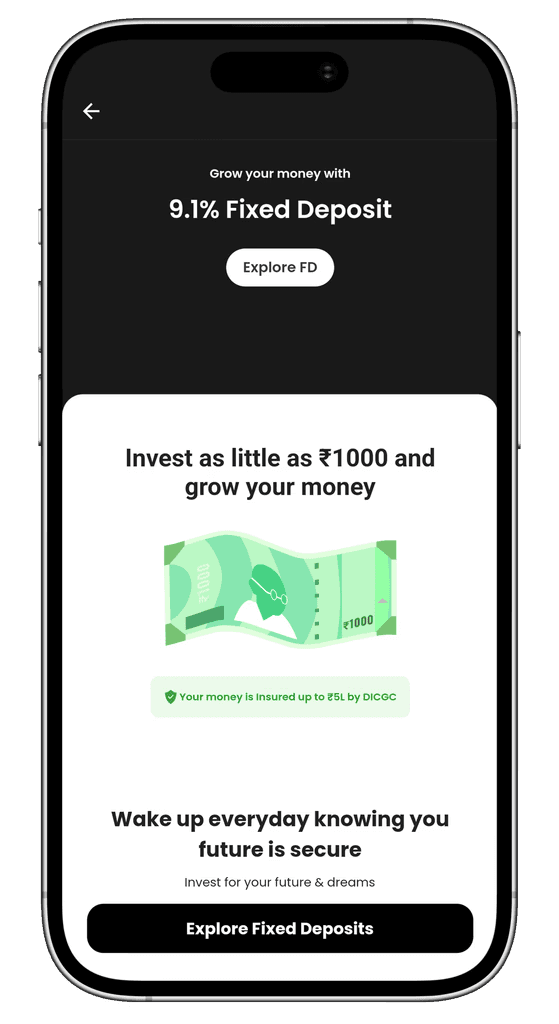
Freo stands out as one of the most well-rounded neobanking apps in India because it combines saving, credit, and everyday money management in one place. Instead of using separate apps for borrowing, tracking expenses, and managing payments, you get a more connected experience here.
Best for:
Key features:
Why choose it:
Freo works well if you want one app that supports both daily spending and credit needs without feeling scattered.
2

Fi Money is a polished consumer neobank that offers a zero-balance digital savings and salary account through Federal Bank. Its clean app, rewards, and goal-based saving tools make it appealing to users who want banking to feel modern and easy to use.
Best for:
Salaried professionals
Users who like cashback and rewards
People who want a zero-balance digital account with UPI
Key features:
Zero-balance savings and salary account
Fi Jars for goal-based saving
Cashback, rewards, and app-based controls
Why choose it:
Fi is a strong option if you want a salary account with useful saving tools, spending insights, and a more engaging app experience.
3

Jupiter is popular for keeping digital banking simple. It offers a zero-balance savings account with Federal Bank and focuses on clean design, smooth onboarding, and helpful budgeting tools for everyday users.
Best for:
First-time neobank users
Young professionals who want spending insights
Users looking for a simple zero-balance account
Key features:
Zero-balance savings account
Instant onboarding with UPI access
Budgeting, expense tracking, and saving pots
Why choose it:
Jupiter is a good fit if you want a clean, no-fuss app that helps you understand spending and manage savings better.
4

Niyo is best known for travel-focused banking. It offers accounts and cards through partner banks and is especially useful for people who spend abroad and want to avoid high forex charges.
Best for:
Frequent international travellers
Students going abroad
Users who want lower forex costs
Key features:
Zero forex markup on select transactions
Travel-friendly account and card options
App controls for card use and tracking
Why choose it:
If overseas spending is a big part of your life, Niyo can help you save on forex fees and manage travel spending more smoothly.
5

RazorpayX is built for startups and SMEs, not retail users. It helps businesses manage current accounts, payouts, payroll, taxes, and collections through one connected finance platform.
Best for:
Startups and digital businesses
Finance teams handling payouts and taxes
Businesses already using Razorpay services
Key features:
Digital current accounts
Automated payouts and collections
Tax payments and integrations with tools like Tally and Zoho
Why choose it:
RazorpayX is ideal if your business wants faster finance operations and less manual work across banking and payments.
6

InstantPay is a business-focused neobank designed for SMEs that want quick digital onboarding and easy access to current account and cash-management tools without traditional banking friction.
Best for:
Small and medium businesses
Firms with mobile-first teams
Businesses seeking simple digital current accounts
Key features:
Digital current accounts and cash-management tools
Collections, payouts, and reconciliation
Mobile and web access with multi-bank support
Why choose it:
InstantPay makes sense for businesses that want practical digital banking tools without moving into a more complex enterprise system.
7
Best for:
Parents introducing kids to digital money
Teenagers making online and offline payments
Families building financial literacy early
Key features:
Teen-focused accounts with parental controls
Numberless card for added safety
UPI payments and spend tracking
Why choose it:
FamPay balances independence and supervision well, making it one of the more established options in India’s teen neobank segment.
8

Mahila Money focuses on women, especially women entrepreneurs and first-time borrowers. Rather than offering generic fintech products, it tries to address real financial gaps faced by women-led businesses.
Best for:
Women micro-entrepreneurs
Home-based business owners
First-time women borrowers
Key features:
Savings, loans, and insurance through partners
Digital onboarding tailored to women-led ventures
Financial guidance and educational content
Why choose it:
Mahila Money stands out because it is built around financial inclusion and offers a more focused experience than mainstream banking apps.
9

Open Money is one of the biggest SME neobanking platforms in India. It combines current accounts, invoicing, payouts, expense management, and business credit in one system.
Best for:
SMEs and startups
Founders who want more than a basic current account
Businesses looking for banking and invoicing together
Key features:
Business current accounts and expense tools
Integrated invoicing and payments
Credit access through partnerships
Why choose it:
Open is a great choice for business owners who want better control over everyday money movement instead of juggling separate tools.
10

Stashfin is more credit-focused than banking-focused. It offers a digital line-of-credit card with flexible access to funds, digital approval, and repayment options that appeal to users needing quick credit.
Best for:
Users with flexible credit needs
People who prefer revolving credit
Users looking to build or rebuild credit
Key features:
Digital line-of-credit card
Quick approval and disbursal
Cashback, ATM withdrawals, and EMI options
Why choose it:
Stashfin is useful if your main priority is flexible borrowing rather than a full-service banking setup.
11

Chqbook is built for small Indian business owners like kirana stores, local merchants, and proprietors. Its multilingual and mobile-first approach makes it more accessible for regional users.
Best for:
Kirana stores and local merchants
Small proprietors and neighbourhood businesses
Users who prefer vernacular interfaces
Key features:
Zero-balance digital current account
Multilingual app support
Basic banking tools plus access to loans and insurance
Why choose it:
Chqbook feels more rooted in the needs of small Indian businesses than many startup-focused fintech platforms.
12

ZikZuk, from the Zaggle group, focuses on financial visibility for SMEs. It combines a business credit card with dashboards that help founders track receivables, payables, and cash flow.
Best for:
SME founders with multiple accounts
Businesses wanting better cash-flow visibility
Founders who need a credit card plus finance dashboard
Key features:
Business credit card for founders
Finance dashboards and forecasting tools
Multi-bank account aggregation
Why choose it:
ZikZuk is useful if your main challenge is not just banking, but getting a clearer picture of your business finances in one place.
13

Finin was one of the early consumer neobanks in India and helped popularize app-first saving and goal-based money management. It has since become part of Open Financial Technologies.
Best for:
Users looking for easy onboarding and high security
People who need AI Powered Insights for their money
Key features:
Goal-based saving experience
Consumer-friendly digital banking design
Now supports Open’s broader banking infrastructure
Why choose it:
Choose it for its rapid, paperless onboarding, high-interest savings via partner SBM Bank, and smart spending analytics to achieve financial independence.
14

Zolve focuses on Indians moving to the US or Canada. It helps students and professionals set up accounts and begin building credit before they arrive abroad.
Best for:
Indian students moving abroad
Professionals relocating to the US or Canada
Users who want banking ready before landing
Key features:
Cross-border account setup support
Credit cards without prior local credit history
Online application using Indian passport and visa details
Why choose it:
Zolve solves a real relocation problem by helping users start banking and credit-building early, which makes settling abroad much easier.
How Do Neobanks Work?
Even though neobanks feel very different from traditional banks, the core idea remains the same. They still provide financial services such as accounts, payments, and cards. The difference lies in how those services are delivered. Here are the main elements that power neobanks.
To understand neobanks, think of them as the "Netflix of Banking"—they replaced the "Blockbuster" (physical branches) with a seamless digital app.
Digital-First Approach
Neobanks are built around apps and web platforms instead of physical branches. The entire banking experience happens online.
You can open an account, transfer money, check balances, freeze cards, or review spending without visiting an office. Everything is designed to work smoothly on a smartphone or laptop.
This approach also allows neobanks to launch updates and improvements much faster than traditional banks.
Integration with Traditional Banks
In India and many other countries, most neobanks do not hold full banking licenses. Instead, they collaborate with licensed banks that handle regulatory responsibilities and hold customer deposits.
The neobank focuses on the user experience, while the partner bank provides the regulated banking infrastructure.
This partnership model allows neobanks to offer legitimate banking services without building a full banking institution from scratch.
Technology-Driven Services
Technology plays a central role in how neobanks operate. Their platforms are built to analyse spending patterns, track transactions instantly, and provide useful financial insights.
For example, many apps automatically group your spending into categories such as food, travel, or shopping. This helps users understand where their money is going without manually tracking expenses.
These insights often turn everyday banking into something more interactive and informative.
Innovative Features
Neobanks often experiment with features that traditional banks take longer to introduce.
Some platforms offer automatic savings tools, spending limits, smart budgeting options, or virtual debit cards for safer online payments.
For businesses, neobanks may include tools such as payment collection links, expense dashboards, or automated bookkeeping integrations.
These features are designed to make everyday money management easier.
Enhanced Security
Although neobanks operate online, security remains a major priority.
Most platforms include multiple layers of protection such as biometric login, instant transaction alerts, card controls, and two-factor authentication.
Users can also block or freeze cards instantly through the app if they notice suspicious activity.
Because everything is digital, monitoring and responding to unusual transactions can often happen much faster.
How to Choose the Right Neobank?
Not every neobank is built for the same purpose. Some focus on personal banking, while others target startups, freelancers, or small businesses.
Before opening an account, it helps to review a few basic factors.
First, check which bank supports the neobank platform. Since deposits are technically held with the partner bank, its reliability matters.
Next, look closely at the app experience. Since the entire service runs digitally, the interface should be simple, stable, and easy to navigate.
You should also review features such as transaction limits, card benefits, and expense tracking tools. Some apps are designed mainly for payments, while others focus on budgeting or financial planning.
Finally, check the fee structure. Many neobanks promote zero-balance accounts, but certain services may still carry charges.
Neobanks vs Traditional Banks
| Feature | Neobanks | Traditional Banks |
|---|---|---|
| Physical Presence | Operate entirely online | Maintain branch networks |
| Account Setup | Quick digital registration | Often requires more formal steps |
| Infrastructure | Work with licensed banking partners | Hold their own banking licenses |
| Fees | Often lower due to digital operations | May include maintenance or service charges |
| Financial Tools | Built-in budgeting and analytics | Limited insights in most apps |
| Customer Access | Mobile and web apps | Branch, phone, and digital access |
| Service Updates | Faster feature rollouts | Slower changes due to legacy systems |
Closing Thoughts
Neobanks are not trying to replace traditional banks completely. Instead, they offer a different way to manage everyday finances.
By combining digital platforms with licensed banking partners, they bring speed, flexibility, and modern tools into routine financial activities.
For people who prefer managing money through apps and want more visibility into their spending habits, neobanks can be a convenient option.
FAQs
Are neobank accounts free?
Many neobanks provide accounts that do not require a minimum balance. However, some services such as premium cards or advanced features may include small fees.