


Personal Loan

Published on:
Last Updated:
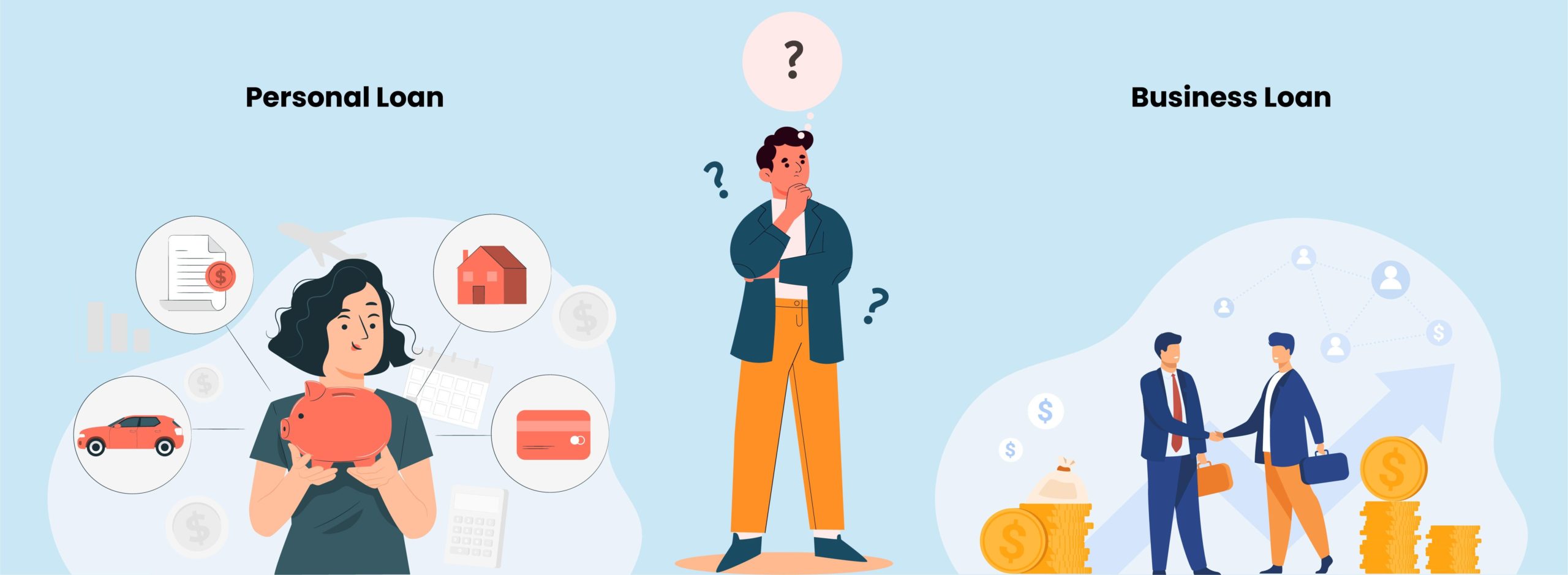
Need money for your business but unsure whether you should take a personal loan or a business loan?
Both options can provide access to funds, but they are meant for different borrowing needs and may be assessed differently by lenders.
A personal loan is generally assessed based on your personal income, credit history and ability to repay. A business loan is intended for business-related expenses and may involve an assessment of factors such as business revenue, cash flow, financial statements and business history.
For self-employed professionals, freelancers and business owners, the choice is not always straightforward. The right option depends on why you need the money, how much you need and how you plan to repay it.
Let's compare the two.
Business Loan vs Personal Loan: At a Glance
Factor | Personal Loan | Business Loan |
|---|---|---|
Primary purpose | Eligible personal or other permitted expenses | Business-related expenses |
Main assessment | Personal income, credit profile and repayment capacity | Business performance, financials, creditworthiness and lender criteria |
Loan amount | Usually linked to personal repayment capacity | May support larger business funding needs, subject to eligibility |
Collateral | Typically unsecured | Can be secured or unsecured |
Documentation | KYC, income and personal financial documents | May include KYC, business and financial documents |
Processing | Often Simpler | May involve more detailed business verification |
Repayment | Usually based on personal income and obligations | Should be manageable against business cash flow |
Tax treatment | Depends on how the loan is used | Depends on the use of funds and applicable tax rules |
Note: The exact terms vary between lenders and loan products, so don't treat these differences as fixed rules.
What Is a Personal Loan?
A personal loan is usually an unsecured loan, which means you generally don't have to pledge an asset as security.
Lenders typically assess your personal financial profile, including factors such as:
Income
Credit history
Existing financial obligations
Repayment capacity
Depending on the lender's terms, a personal loan can be used for expenses such as medical needs, education, weddings, travel, home renovation or other eligible requirements.
For self-employed applicants, income and other financial information may also be considered when assessing eligibility.
What Is a Business Loan?
A business loan is financing intended for business-related requirements.
Depending on the loan product, you may use it for purposes such as:
Working capital
Inventory
Equipment
Business expansion
Operational expenses
The lender may look at the business's financial health as part of the assessment. This can include revenue, cash flow, business vintage, financial statements, existing liabilities and credit history.
A business loan does not automatically mean a secured loan. Business financing can be secured or unsecured, depending on the lender, product, loan amount and applicant's profile.
Personal Loan vs Business Loan: Key Differences
Purpose of Borrowing
A personal loan is generally meant for eligible personal requirements, while a business loan is specifically designed to finance business needs.
For example, if you need money for a medical expense or home renovation, a personal loan may be relevant.
If you need funds to purchase inventory, buy equipment or expand your operations, a business loan may be more appropriate.
If you're a business owner considering a personal loan for a business expense, make sure the lender permits the intended use of funds.
How Eligibility Is Assessed
For a personal loan, the lender generally focuses on you as the borrower. Your income, credit history, existing obligations and repayment capacity can influence the decision.
For a business loan, the lender may also assess the business itself. Revenue, cash flow, financial statements, business history and existing liabilities can all form part of the evaluation.
This is one reason an established business with consistent financial records may have different financing options from a newly started business.
Documentation
Personal loans generally involve personal KYC and income-related documentation, although the exact requirements vary by lender.
Business loans can require additional documents relating to the business, such as financial statements, bank statements, registration details or proof of business activity.
The actual documentation depends on the lender and loan product.
Loan Amount
The amount you can borrow depends on the lender's eligibility criteria and your repayment capacity.
Personal loan amounts are generally linked to your individual income, credit profile and existing obligations.
Business financing can support larger funding requirements, but the amount sanctioned may depend on factors such as business revenue, cash flow, financial performance and the lender's assessment.
So, needing a larger amount does not automatically mean you will qualify for a larger business loan.
Collateral
A personal loan is generally unsecured, so you usually don't need to pledge an asset.
Business loans can be either secured or unsecured.
If a business loan requires collateral, understand exactly what asset is being pledged and what the consequences could be if you are unable to repay the loan.
Interest Rate and Total Cost
There is no universal rule that business loans always have lower interest rates than personal loans.
The rate you receive can depend on your credit profile, income, business performance, collateral, loan amount, tenure and lender.
Instead of comparing only the advertised interest rate, look at the APR where applicable, processing fees, other charges, EMI and total repayment amount.
Repayment
The repayment structure should match your cash flow.
With a personal loan, you generally repay through scheduled EMIs from your personal income.
With business financing, repayment should ideally be planned around the business's cash flow and expected revenue.
Before borrowing, calculate the EMI and make sure the repayment remains manageable even if your income or business revenue fluctuates.
Tax Treatment
Tax treatment depends on how the borrowed money is used and the applicable tax rules, not simply whether the loan is called a personal or business loan.
Interest on borrowing used for eligible business purposes may qualify as a business expense, subject to applicable tax provisions and documentation.
The tax treatment of a personal loan can also depend on how the borrowed funds are used.
If tax deductions are an important part of your decision, speak with a qualified tax professional about your specific situation.
Personal Loan vs Business Loan: Which Should You Choose?
There isn't one option that is better for everyone.
Your decision should start with the purpose of the borrowing and your ability to repay it.
Your situation | What you can consider |
|---|---|
You need money for an eligible personal expense | Personal loan |
You need funds for inventory or working capital | Business loan |
You have a stable personal income and need a smaller amount | Compare personal loan options |
Your business has established financial records | Compare business loan options |
You need funding specifically for business expansion | Business financing |
You want to keep business borrowing separate from personal finances | Business loan |
Your business is new and has limited financial history | Compare both options carefully |
You need a smaller amount quickly and qualify personally | Compare the cost and terms of a personal loan |
The important thing is to compare the actual offers available to you, rather than assuming one loan type will always be cheaper or easier to get.
Final Takeaway
A personal loan and a business loan can both help you access funds, but they are designed around different borrowing needs.
A personal loan is generally assessed around your personal financial profile, while a business loan may involve a closer look at the business's financial performance and funding requirements.
If you need money for a personal expense, a personal loan may be the more natural fit. If you need funds for working capital, equipment or business expansion, dedicated business financing may make more sense.
For self-employed individuals and small business owners, the choice can be less obvious. In that case, compare both options based on the amount you need, total cost, documentation, collateral, repayment terms and your ability to repay.
The cheapest or fastest loan isn't necessarily the right one. The right loan is the one that meets your requirement without putting unnecessary pressure on your finances.
Fuel Your Business Growth Instantly
Don't let rigid bank rules slow down your hustle. Get a flexible personal credit line to fund your business equipment, inventory, or daily operations without the heavy paperwork.

FAQs
Is a business loan better than a personal loan?
Neither is automatically better.
A business loan may be more suitable when you need funds specifically for business operations, working capital or expansion. A personal loan may be more convenient when you need a smaller amount and qualify based on your personal income and credit profile.
Compare the actual interest rate, fees, repayment terms, collateral requirements and total cost before deciding.
Can I use a personal loan to fund my business?
It can be possible, depending on the lender's terms and permitted use of the loan.
A personal loan may be considered by self-employed individuals or small business owners who need relatively small business funding and qualify based on their personal financial profile.
Which has a lower interest rate, a personal loan or business loan?
There is no fixed answer.
The interest rate depends on factors such as the lender, borrower profile, creditworthiness, business performance, loan amount, tenure and whether collateral is involved.
Don't assume a business loan will always be cheaper. Compare the complete cost of the offers available to you.
Do I need collateral for a business loan in India?
Not always.
Some business loans are unsecured, while others require collateral. The requirement depends on the lender, loan product, amount and applicant's profile.
Is interest on a business loan tax-deductible?
Interest on borrowing used for eligible business purposes may qualify as a business expense under applicable tax rules. The exact treatment depends on the nature and use of the borrowing and the taxpayer's circumstances.
If you are relying on a tax deduction when comparing loans, consult a qualified tax professional.
Does taking a business loan affect my personal credit score?
It can, depending on the loan structure, lender reporting practices and whether you are personally liable or have provided a personal guarantee.
Check the loan agreement and understand whose credit profile the lender will report to before borrowing.
Which loan is faster to get, a personal loan or business loan?
Personal loans can often involve a simpler application because the assessment is primarily based on the individual's financial profile.
Business loans may require additional business verification and financial documentation, which can make the process more involved.
However, processing time varies between lenders and loan products.
Am I personally liable for a business loan?
It depends on the business structure, loan agreement and lender's terms.
Some lenders may require the business owner, director or another individual to provide a personal guarantee. If you are asked to provide one, understand the liability involved before accepting the loan.
Naina Rajgopalan
Naina Rajgopalan has a thing for numbers and a deep fascination to learn about all things finance. She's been money-wise from a young age and has always shared her knowledge and tips with those around her. Being a part of the content team at Freo, a neobank that offers flexible and customised financial products, along with benefits such as insurance on balance, safe & secure banking, and so on, Naina stays updated with the latest of what happens in the banking and fintech industries. She has taken upon herself to share her knowledge with readers across all walks of life to help them manage their finances and budgets better, so they can make better decisions while spending, borrowing, investing and saving.