



Loan

Published on:
Last Updated:
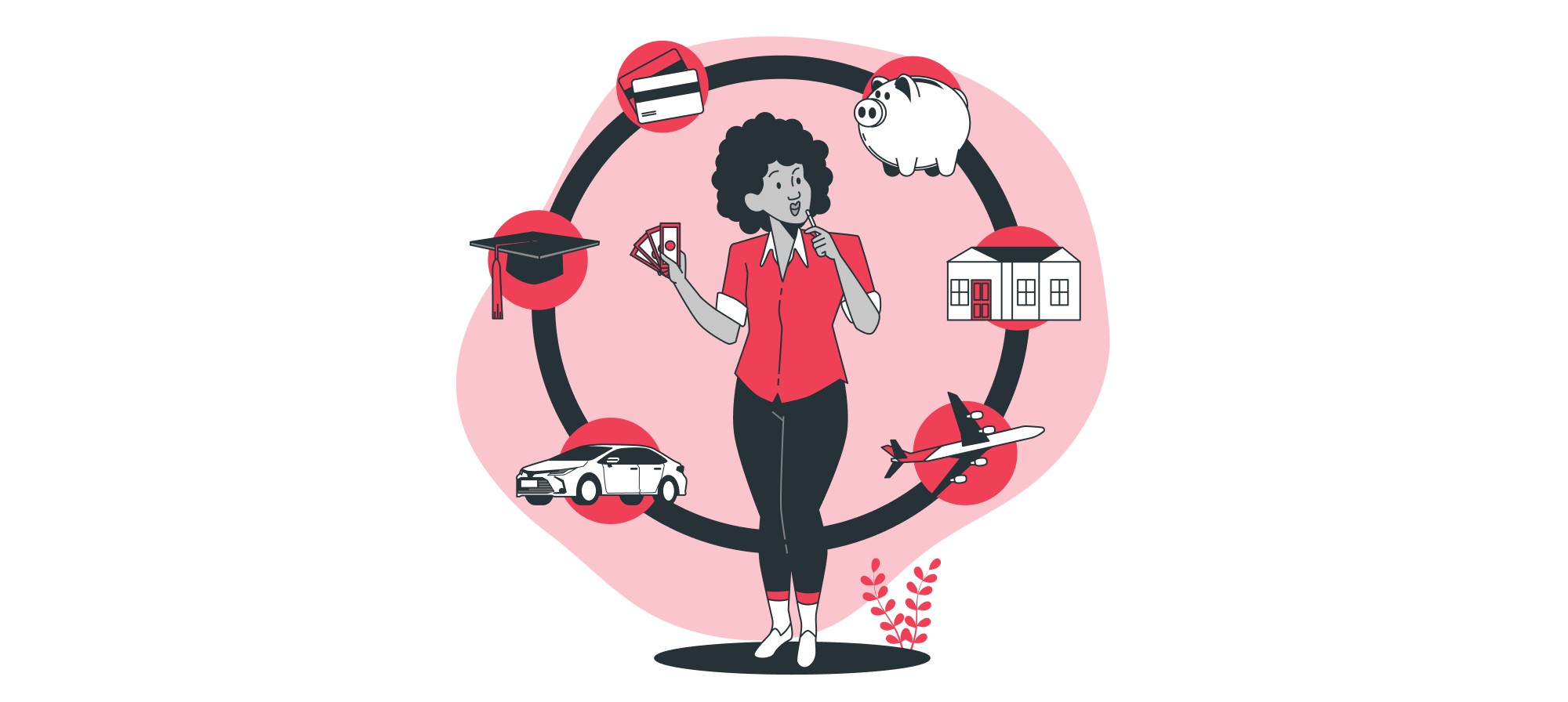
A loan is a sum of money borrowed from a bank or financial institution and repaid over time with interest.In India, loans fall into two broad categories: secured vs unsecured loan. Secured loans are backed by collateral such as property or gold, while unsecured loans are approved based primarily on creditworthiness without requiring collateral. Within these two categories sit more than a dozen specific loan types, each designed for a different purpose. This guide covers all of them, along with how to decide which one actually fits your needs.
Secured vs Unsecured Loans: The Two Main Categories
Every loan type in this guide falls under one of these two umbrellas.
Based On | Secured Loan | Unsecured Loan |
|---|---|---|
Collateral | Required (property, gold, vehicle, FD, and so on) | Not required |
Interest rate | Generally lower, since the lender's risk is reduced | Generally higher, to offset the lender's risk |
Loan amount | Can be significantly larger, tied to the collateral's value | Usually smaller, tied to income and credit profile |
Approval basis | Value of the pledged asset, alongside income and credit score | Credit score, income and repayment capacity alone |
Risk to borrower | Lender can seize and sell the pledged asset on default | No asset at risk, but default still seriously damages credit score |
Examples | Home loan, car loan, gold loan, loan against property | Personal loan, most education loans, business working capital |
Types of Secured Loans
Home Loan
A home loan finances the purchase, construction or renovation of a residential property, with the property itself serving as collateral. Lenders typically finance up to 75 to 90% of the property's value, with the remainder paid as a down payment by the borrower, and tenures can run as long as 30 years.
Home loans themselves come in several distinct forms, depending on the exact need:
Home purchase loan: for buying a ready-to-move or under-construction property.
Home construction loan: for building a house on land already owned, usually disbursed in stages as construction progresses.
Home improvement or renovation loan: for repairs, upgrades or extensions to an existing home.
Land purchase loan: for buying a plot of land, typically with the requirement that construction begins within a set period.
Balance transfer loan: for moving an existing home loan to a new lender offering a lower interest rate.
Top-up loan: additional funds borrowed on top of an existing home loan, usually at a lower rate than a fresh personal loan.
NRI home loan: a home loan structured specifically for non-resident Indians purchasing property in India.
Loan Against Property (LAP)
A loan against property lets an owner borrow against an existing residential or commercial property, whether self-occupied or rented out, without having to sell it. Since the loan amount is based on the property's market value, LAP typically allows for a higher borrowing limit than an unsecured loan, and interest rates sit lower than personal loans, though still above a standard home loan, since the funds can be used for any purpose rather than only property-related expenses.
Gold Loan
A gold loan is secured against gold jewelery or ornaments pledged with the lender. It's one of the fastest loan types to access, often disbursed within hours, and is well suited to short-term cash needs given its typically shorter repayment tenure compared with home loans or LAP.
Car or Vehicle Loan
A car loan finances the purchase of a new or used vehicle, with the vehicle itself pledged as collateral. If repayments stop, the lender has the right to repossess the vehicle. Because the loan is secured, vehicle loan interest rates are generally lower than unsecured borrowing options, and the exact rate depends on the borrower's credit score, income and the lender's terms.
Loan Against Fixed Deposit
Many banks allow a fixed deposit holder to borrow against the FD rather than break it prematurely, typically up to 90 to 95% of its value. Since the FD itself secures the loan, interest rates are usually just slightly above the FD's own rate, making this one of the most cost-effective ways to access short-term funds without losing the deposit's maturity benefits.
Loan Against Mutual Funds and Shares
Investors can borrow against the value of mutual fund units or listed shares they hold, without having to liquidate the investment. This route usually comes with flexible repayment options and no prepayment penalty, and the securities are simply pledged with the lender rather than sold, so the investment continues to stay invested and grow.
Loan Against Insurance Policy
Certain insurance policies, particularly those with a surrender value, can be pledged as collateral for a loan. This is a lesser-known option, but it can be a useful source of funds during a cash crunch for policyholders who'd rather not liquidate other assets.
Types of Unsecured Loans
Personal Loan
A personal loan provides funds that can generally be used for a range of personal financial requirements, subject to the lender's terms.
A person may consider a personal loan for needs such as:
Medical expenses
Wedding expenses
Home renovation
Travel
Education-related expenses
Emergency financial requirements
Debt consolidation, where appropriate
Personal loans are generally unsecured, so the borrower does not have to pledge an asset as collateral.
The amount, interest rate and repayment period depend on the lender's eligibility criteria and the borrower's financial profile.
Education Loan
Education loans fund tuition and related costs for higher studies in India or abroad. Whether an education loan is secured or unsecured depends largely on the amount: many lenders offer smaller education loans without collateral, while larger amounts, particularly for study abroad, often require collateral or a guarantor. Interest rates commonly range from around 8% to 14% per annum, and repayment usually begins only after a moratorium period covering the course duration plus a set number of months.
Business Loan
Business loans fund working capital, equipment purchases, inventory, or expansion, and eligibility is based on the business's revenue, banking history and financial statements rather than the owner's personal profile alone. Several distinct types exist:
Working capital loans: short-term funding for day-to-day operational needs, such as inventory or payroll, usually unsecured and requiring repayment within a year.
Term business loans: a lump sum repaid over a fixed period, typically used for equipment purchases or expansion.
Mudra loans: government-backed loans under the Pradhan Mantri Mudra Yojana, offered in three tiers, Shishu (up to ₹50,000), Kishor (₹50,000 to ₹5 lakh), and Tarun (₹5 lakh to ₹10 lakh), aimed specifically at small and micro businesses.
Overdraft facilities: a flexible credit line linked to a business current account, where interest is charged only on the amount used.
Flexi Loan
A flexi loan provides access to an approved credit limit that can be withdrawn from as needed, rather than as a single lump sum. There's no cap on the number of withdrawals within the limit, and interest is charged only on the amount actually drawn and outstanding, rather than the full sanctioned limit, which makes it a cost-efficient option for irregular or unpredictable funding needs.
Consumer Durable Loan
A consumer durable loan finances the purchase of electronics, appliances or furniture, typically ranging from around ₹5,000 to ₹5 lakh. Many lenders and retailers offer these with zero or low interest, minimal paperwork and instant approval at the point of purchase, often referred to as No Cost EMI.
Credit Card
A credit card technically works differently from a traditional loan: instead of a one-time lump sum, it provides a revolving credit limit that can be used repeatedly, repaid, and used again. Paying the full statement balance each cycle avoids interest entirely, but carrying a balance forward attracts some of the highest interest rates of any credit product, often well above 30% per annum.
How to Choose the Right Type of Loan
Match the loan to its purpose. A home loan or car loan exists specifically for that purchase and comes with better rates than borrowing for the same thing through a personal loan.
Weigh collateral against cost. A secured loan brings a lower interest rate, but puts an asset at risk. Be certain the pledged asset's value and the loan's necessity justify that trade-off.
Compare interest rates and total cost across lenders, not just the headline rate, factoring in processing fees and any prepayment charges.
Borrow only what's needed and comfortably repayable, checking the resulting EMI against monthly income before committing.
Check credit score before applying, since a stronger score generally means better interest rates and faster approval, particularly for unsecured loans.
Find the Perfect Loan for Your Every Need
Why settle for a one-size-fits-all loan? Whether it's for a sudden medical bill or a planned home upgrade, Freo offers a smart, digital credit line that adapts to your life.
Frequently Asked Questions
How many types of loans are there in India?
There is no single fixed number because loans can be classified by purpose, collateral, repayment structure and other characteristics. Common consumer loan categories include personal, home, vehicle, education and gold loans, while businesses can access products such as business and working-capital finance.
What are the two main types of loans?
Loans are commonly divided into secured and unsecured loans based on whether collateral is required. They can also be classified by purpose, such as home loans, personal loans, education loans and vehicle loans.
Which type of loan does not require collateral?
Personal loans are commonly unsecured, meaning a borrower generally does not have to pledge a specific asset. However, eligibility and terms vary by lender.
Which type of loan is suitable for buying a house?
A home loan is specifically designed to finance the purchase or construction of a residential property.
Which loan is used for higher education?
An education loan is designed to help finance eligible higher-education expenses, subject to the lender's terms and applicable schemes.
Is a vehicle loan secured or unsecured?
Vehicle loans are generally secured by the vehicle being financed, although the exact structure depends on the lender and product.
Is a personal loan secured or unsecured?
Personal loans are generally unsecured, so they do not normally require a specific asset as collateral.
Which loan is suitable for business expenses?
A business loan or another appropriate business-finance facility may be considered for business-related expenses. The right product depends on the nature and size of the requirement.
Can a person have more than one loan?
Yes, a person may have multiple loans, subject to lender eligibility and repayment capacity. Existing obligations are generally considered when assessing a new application.
Which type of loan has the lowest interest rate?
There is no universally lowest-rate loan. Secured borrowing can often have lower rates than comparable unsecured borrowing because the lender has collateral, but the actual rate depends on the lender, product, borrower and prevailing terms.
Is a longer loan tenure always better?
No. A longer tenure can reduce the scheduled monthly repayment but may increase the total interest paid over the life of the loan.
Naina Rajgopalan
Naina Rajgopalan has a thing for numbers and a deep fascination to learn about all things finance. She's been money-wise from a young age and has always shared her knowledge and tips with those around her. Being a part of the content team at Freo, a neobank that offers flexible and customised financial products, along with benefits such as insurance on balance, safe & secure banking, and so on, Naina stays updated with the latest of what happens in the banking and fintech industries. She has taken upon herself to share her knowledge with readers across all walks of life to help them manage their finances and budgets better, so they can make better decisions while spending, borrowing, investing and saving.